By: Graeylin
|
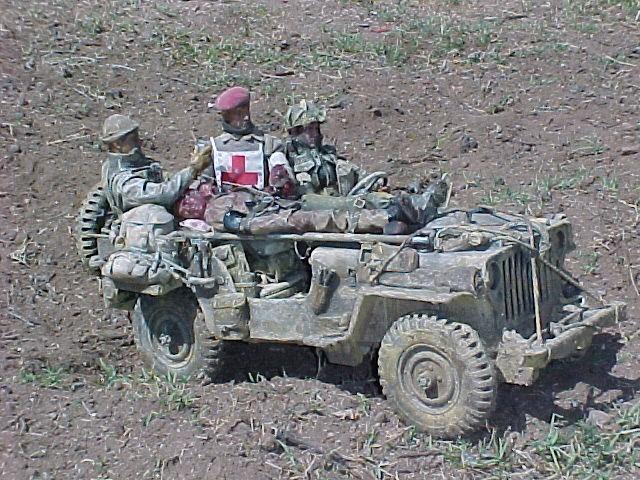
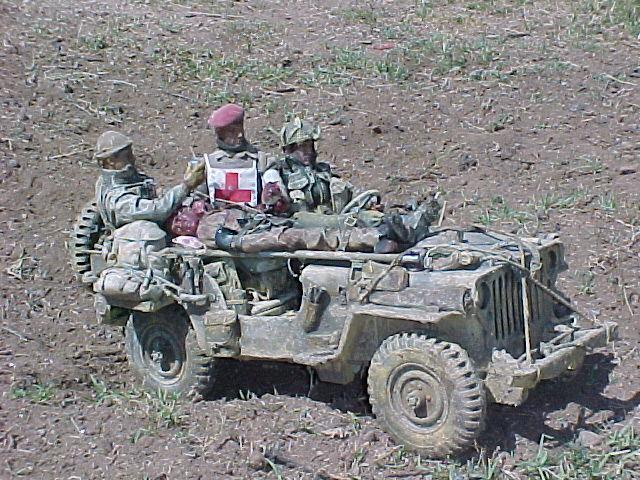
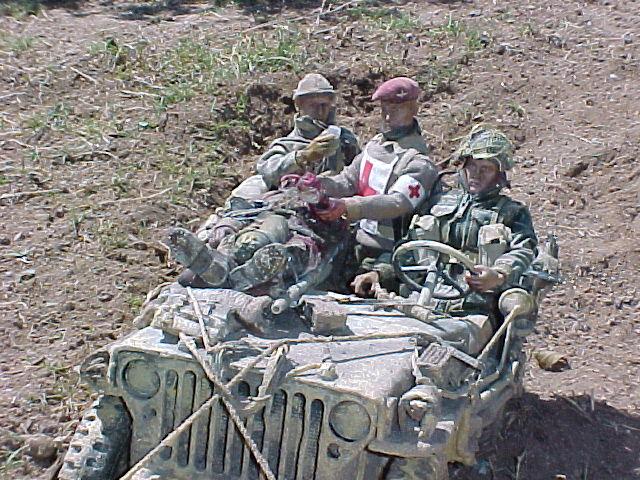
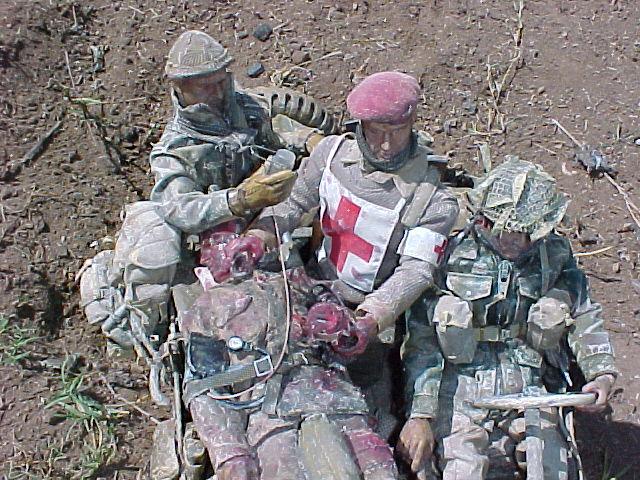
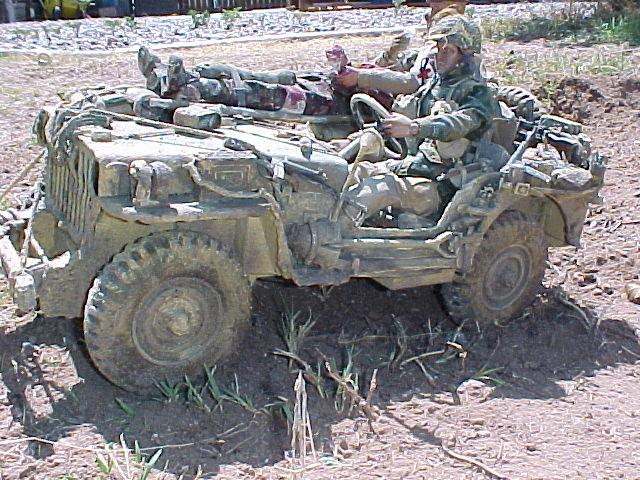
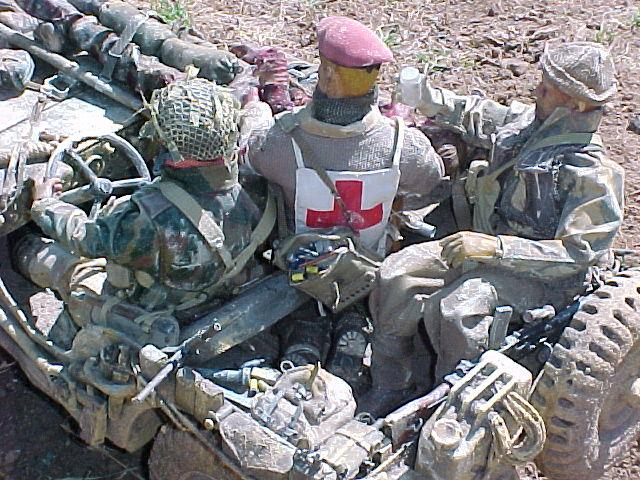
Finally, here's the finished product... A British SAS jeep in Oman, circa 1960 or so, rushing a wounded para to the hospital.
The first 12 photos were taken in the bright morning sun of Arizona, and gives a washed out, drab look to the jeep. The following pics were taken in the evening light, and I think present the jeep in more "real" colors, at least to my eye. Details, on some of the effects... I used a blow torch to heat and thin the plastic on the fenders, grill, etc. A rotary sander thinned out the other areas for effect, and gave scrape marks as well. I sprayed a light dusting of "splatter" paint on the wheel wells, front and rear where the dirt would build up most. THe "faux stone" paint works well to give some depth/mud effect. I also then added a wash of wet, very thin watery plaster mixed with dirt to the frame, rear wheel, and undersides. This took several weeks, as I did a layer, let it dry, added dirt to my mix, and did more. This layers the mud here and there in a realistic style. If I applied too thick, I sanded off with a nail file. I then dry brushed with watercolor paint mixed with VERY thin plaster (almost milk-like) and dirt. In between each coat, I would let dry, then brush with a stiff dry brush to knock off the lumps and dry dirt that was too thick. I then used a white/sandy wash on the clothing, immediately followed by a spray of water. This blended the paint into creases, and spread it across the cloth much better than I could ever do. It allowed highlights and made the wear much more believable. I followed up with different colors of dirt/paint in critical areas, then watersprayed after every application. This added dirt to the neckline (dark paint) and highlights to the elbows/knees (lighter paint). The general dripping of water carried extra paint downwards to puddle and pool on the floor, which was fine. Same thing worked well for wheel wells, etc. A line of paint applied at the top, and a spritz of water to let it flow downwards. The faces were done the same way: a line of color over the eyes, and a spritz of water to make it "sweat" and run downwards. I also used tea in the spritzer at times to give a bit more color, as the tea stained the faces and added some nice browns in the necklines. Then, I took some spray "tacky glue" and sprayed the major areas of the jeep, the tires, wheel wells, etc. and took it out to my sandbox. I sifted fine sand and let the dust settle onto the jeep. Once it dried a bit, I drybrushed it off where it was too thick, and let the sand settle into the cracks and crevices. My final touch was to brush/sand off the dirt from gear shift, tool handles, and areas where it built up too much (behind the gear packs, for example). |
|
|
Back to the Photos